
A polished concrete warehouse, tiled restaurant, carpeted hotel and vinyl-floored aged-care facility can all use cleaning robots — but not the same robot, tools or cleaning process. Even two buildings with the same flooring can need different solutions because one produces fine dust while the other deals with grease, spills or heavy trolley traffic.
This guide helps you identify the floor, choose the right cleaning method and narrow the PUDU robot shortlist. It is a starting assessment, not a substitute for the flooring manufacturer's instructions or a live site test. See our Commercial Cleaning Robot Guide for pricing and ROI context.
The rule that prevents most expensive mistakes
Direct answer
Short answer: is my floor right for a cleaning robot?
Most sound, reasonably level commercial floors can benefit from some form of robotic or machine-assisted cleaning. That does not mean every floor can be wet-scrubbed, every site can run autonomously, or one robot can handle every zone.
The strongest candidates are repeated cleaning tasks across open, predictable areas with stable layouts. The weakest candidates are stairs, badly damaged or highly irregular surfaces, deep or loose textile flooring, areas dominated by drains and thresholds, constantly changing clutter, and tasks centred on corners, vertical surfaces, toilets or emergency spills.
The correct selection order is:
Floor construction and finish → floor condition → contamination → required cleaning process → site geometry and traffic → compatible robot → on-site test
Five-minute floor and site self-assessment
Before comparing robots, answer these eight questions.
- 1
What is the exact floor and finish?
Is it polished or unsealed concrete, epoxy, sheet vinyl, LVT, safety flooring, tile, rubber, stone or carpet? "Concrete" alone is not enough: unsealed, sealed and polished concrete behave differently. If you are unsure, look for the building finish schedule, flooring invoice or manufacturer label.
- 2
Is the floor sound?
Look for cracks, holes, spalling, loose tiles, open seams, lifted carpet edges, deep joints, lipped tiles and sudden height changes. A robot may navigate around a visible obstacle but cannot repair a surface that prevents consistent wheel contact, brushing or water recovery.
- 3
What must be removed?
Dry dust, litter, hair, food particles, sticky spills, grease, oil, tyre film, powders and embedded carpet soil require different cleaning actions. Begin with the contamination, not a preferred model.
- 4
Can the floor be wet-cleaned?
Check the floor manufacturer's current care guide. Do not assume that a waterproof-looking surface tolerates an autonomous scrubber. Timber, laminate, cork, raised access flooring, open seams and some stone or specialist finishes need much tighter moisture control.
- 5
How open is the cleanable area?
Measure the narrowest doors and aisles, not just the total square metres. Account for chairs, pallets, cables, displays, stock, trolleys and turning space. The gross building area can be much larger than the floor a robot can actually reach.
- 6
What moves through the area?
Customers, patients, residents, luggage, trolleys, forklifts and production vehicles affect safe timing and achievable coverage. Low-traffic cleaning windows usually improve both productivity and safety.
- 7
What manual work will remain?
Include stairs, bathrooms, corners, skirtings, drains, under fixed equipment, gum, adhesive, urgent spills and hygiene-critical exceptions. A realistic business case counts the work the robot cannot take over.
- 8
Where will the robot live?
Plan charging, storage, clean-water fill, dirty-water disposal, network coverage where required and daily ownership. A robot without a trained operator and a defined routine quickly becomes disconnected from the cleaning workflow.
Match the soil to the cleaning method first
The selector goes Floor → Soil/contamination → Cleaning action → PUDU starting point. Use the table on desktop and cards on mobile.
Cleaning problem
Fine dry dust and loose litter on a hard industrial floor
Required action
Sweep with dust control
PUDU starting point
MT1; MT1 Max for suitable outdoor or semi-outdoor zones
Cleaning problem
Dry soil on carpet or mixed carpet/hard floor
Required action
Vacuum, sweep and/or dust-mop
PUDU starting point
MT1 Vac; CC1 or CC1 Pro with the correct carpet configuration
Cleaning problem
Adhered soil, footprints and water-soluble film on a hard floor
Required action
Apply solution, agitate and recover dirty water
PUDU starting point
SH1, CC1, CC1 Pro or BG1 depending on area and geometry
Cleaning problem
Heavy dry debris followed by oily or dirty film
Required action
Separate dry-sweep and wet-scrub stages
PUDU starting point
MT1 plus CC1 or BG1; or BG1 where one-pass sweep-and-scrub is validated
Cleaning problem
Greasy compact back-of-house floor
Required action
Compatible detergent, agitation and immediate recovery
PUDU starting point
SH1 is often the practical starting point; autonomy requires a test
Cleaning problem
Carpet spots and embedded soil
Required action
Spot treatment and periodic extraction
PUDU starting point
Manual or specialist process; routine robot vacuuming is only the maintenance layer
Quick PUDU floor-cleaning selector
Product callouts use authorised PUDU imagery. Click through for full specifications on each robot's page.
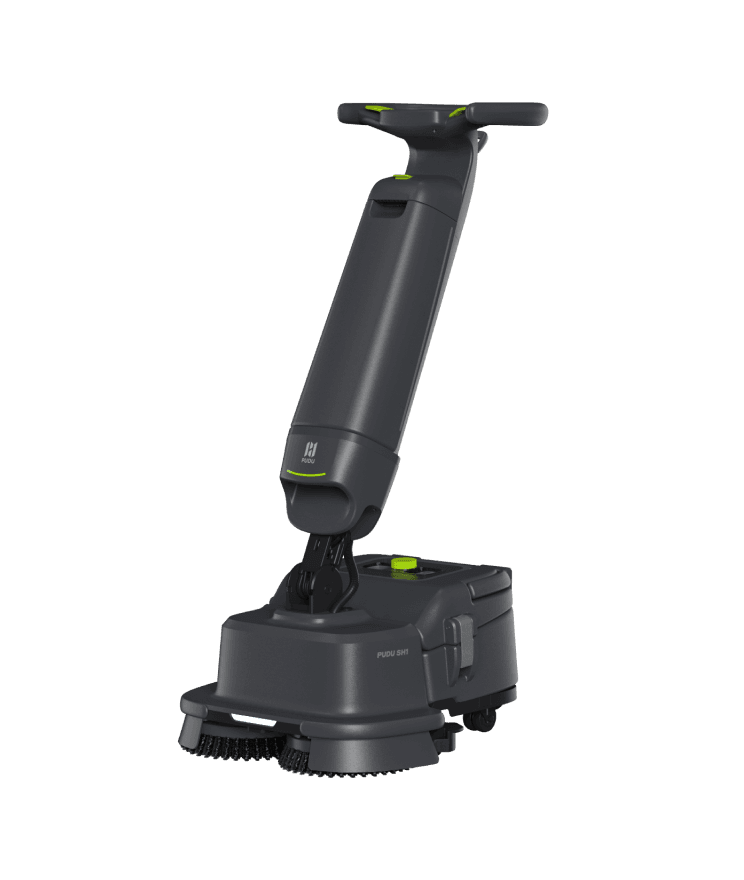
Manual scrubber-dryer
PUDU SH1
Compact staff-operated hard-floor cleaning
Manually operated upright scrubber-dryer with 44 cm working width. Not autonomous — a person controls dwell time and revisits difficult soil.
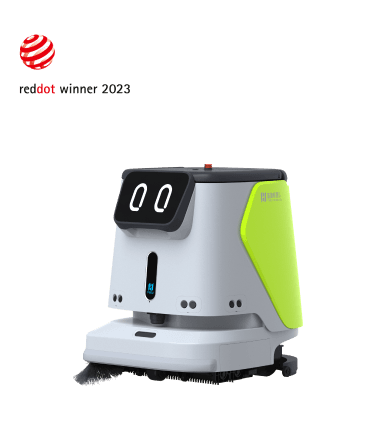
4-in-1 autonomous
PUDU CC1
Mixed indoor commercial floors
Autonomous platform supporting sweeping, mopping, scrubbing and vacuuming. Soft-carpet vacuuming requires the separately purchased carpet assembly.
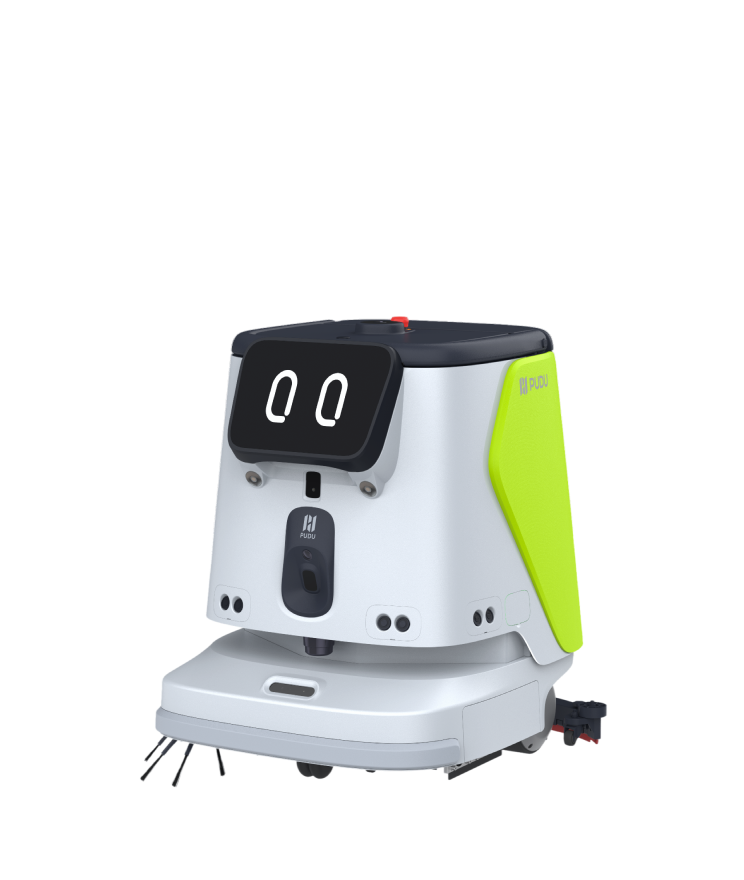
AI-supported autonomous
PUDU CC1 Pro
Larger or more demanding mixed facilities
Adds AI spot scrubbing, floor recognition, performance detection and reporting. Published minimum path clearance is 70 cm.
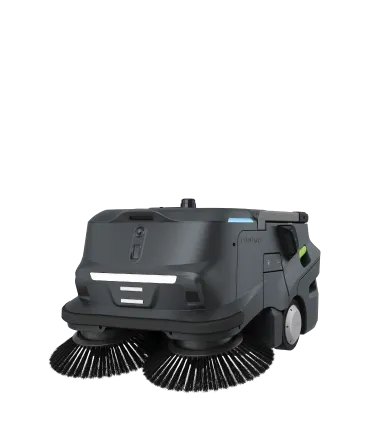
Dry sweeper
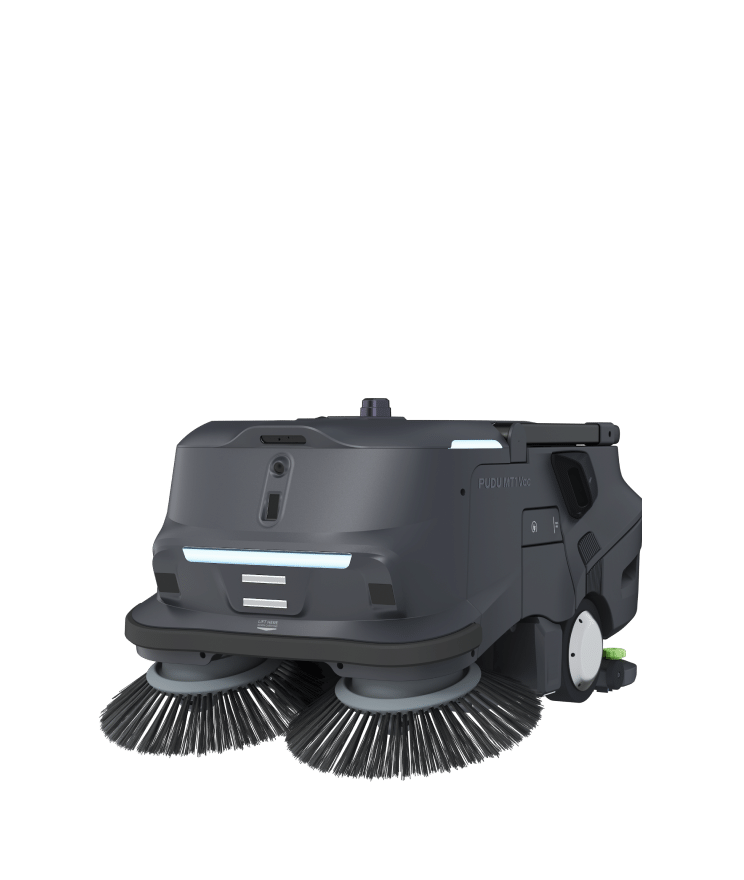
PUDU MT1
Large indoor dry-debris sweeping
Autonomous dry sweeper with a 35 L bin and 70 cm practical cleaning width. Does not scrub adhered soil or remove oily film.
Vacuum + sweep
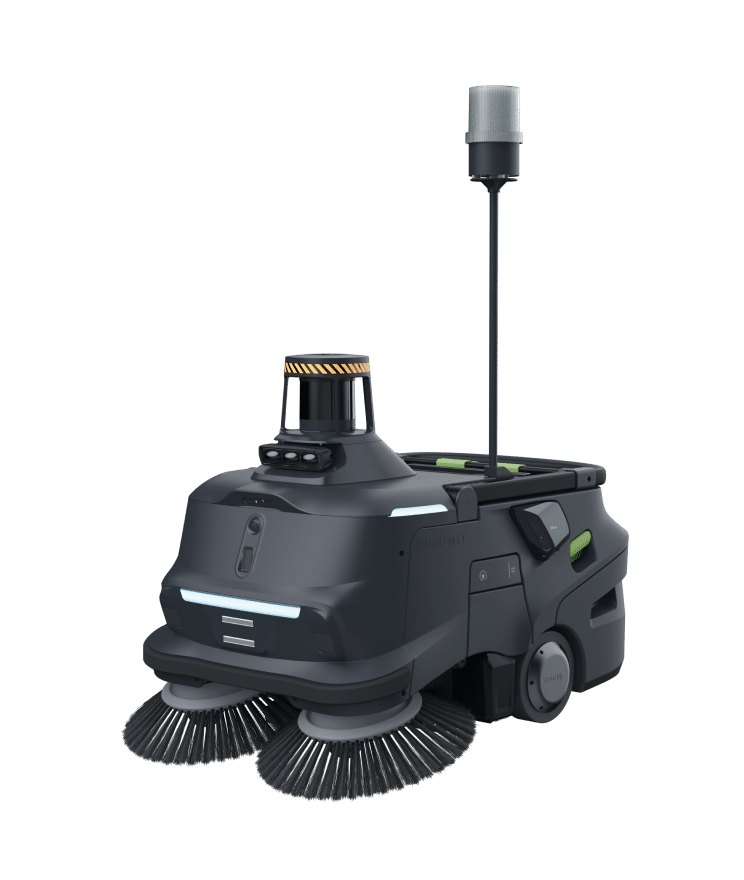
PUDU MT1 Vac
Carpet and dry mixed-floor maintenance
Sweeps, vacuums and dust-mops hard floor and carpet. H11 filtration standard, H13 optional. Not a wet carpet extractor.
Outdoor sweeper
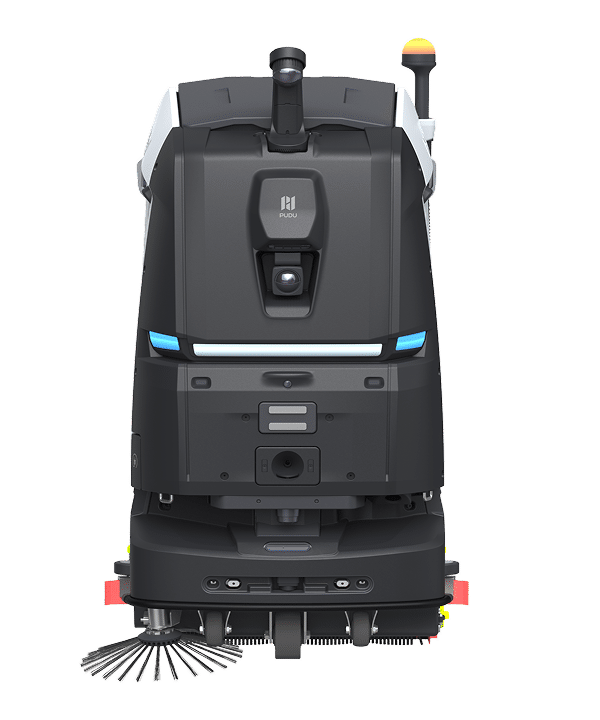
PUDU MT1 Max
Outdoor and semi-outdoor dry sweeping
Outdoor dry sweeper with 3D perception, 35 L container, IP54 protection and rain-avoidance. PUDU advises against extreme-weather use.
Large sweep-scrub
PUDU BG1 Series
Large open hard-floor sweeping and scrubbing
High-capacity sweep-and-scrub platform. 75 L clean-water and 60 L waste-water tanks, edge scrubbing, 85 cm minimum path clearance.
Can robots clean polished or sealed concrete?
Usually yes. Smooth, sound polished or sealed concrete is one of the stronger robotic-cleaning candidates.
Dry debris can be swept, while adhered soil can often be scrubbed with a compatible neutral cleaner and suitable pad or brush. Expansion joints, dust, tyre marks, sealers and traffic still need assessment.
Polished concrete is common in warehouses, retail, showrooms, transport areas and manufacturing. The same surface creates different work:
- A dry warehouse may mainly need MT1 to collect dust, labels and packaging fragments.
- A showroom may need CC1, CC1 Pro or SH1 with a finish-safe pad to control footprints without dulling the gloss.
- A large facility with ingrained film may justify the BG1 Series.
Avoid assuming that an aggressive pad or strong chemical is safe. A test patch should confirm the cleaning result, gloss, slip performance and residue. Schedule autonomous work away from peak forklift or customer traffic where possible.
What about unsealed, dusty or damaged concrete?
Unsealed or dusty concrete is only conditionally suitable.
Dry sweeping or vacuuming may help, but wet scrubbing can turn surface dust into slurry and may not solve the underlying dusting. Cracks, spalling, potholes and lifted joints can also reduce cleaning contact or stop navigation.
Start by determining whether the slab needs repair, densification or sealing. For fine dry dust, compare MT1 with MT1 Vac and the required filtration. Hazardous or silica-containing dust requires specialist WHS assessment; it is not a general robot recommendation.
Can robots clean epoxy and resin floors?
Often yes, if the coating is intact and the chemistry is compatible.
Seamless epoxy floors are common in warehouses, workshops, food facilities and manufacturing because they can be easy to clean. The risk is treating all resin coatings as identical.
Routine dry debris may suit MT1. CC1, CC1 Pro, BG1 or SH1 can be assessed for wet scrubbing. Oil, grease, chemical residues and tyre marks may require a specific detergent, dwell time or pad. Solvents, aggressive alkalinity and abrasive tools can damage or dull some systems.
Inspect for delamination, exposed substrate, bubbles, chips and worn anti-slip aggregate. In food or chemical environments, confirm the coating manufacturer's approved procedure and validate the result.
Can robots clean ceramic, porcelain and quarry tiles?
Usually, but grout and texture decide performance.
Smooth, well-laid tile can suit autonomous scrubbing. Deep or recessed grout, lipped tiles and aggressive slip-resistant profiles can reduce brush contact and dirty-water recovery.
Use dry sweeping or vacuuming first where loose soil is significant. For wet cleaning, test a brush or pad that reaches the texture without scratching glaze or damaging grout. Restaurants and food courts also need a grease-compatible process and immediate spill response.
SH1 is a strong starting point for compact hospitality areas. CC1 or CC1 Pro can suit open dining, corridor or retail areas. BG1 is intended for much larger open floors. Bathrooms, drains, tight kitchen equipment and detailed grout restoration remain manual or specialist work.
Can robots clean safety flooring and non-slip surfaces?
Potentially — but always test.
Safety vinyl and profiled tile gain slip resistance from texture or embedded aggregate. That texture can hold soil, demand more agitation and make water recovery harder than on a smooth floor.
The correct brush, pad, chemical concentration and recovery setup must be tested on the actual floor. A poor process can leave residue, water or grease in the texture and make the surface less safe even if it appears cleaner.
Compact, greasy or drain-heavy back-of-house areas often favour a staff-operated SH1 because the operator can dwell, revisit and manage exceptions. Open safety-floor corridors may suit CC1 or CC1 Pro after a controlled trial.
Can robots clean sheet vinyl?
Usually yes when the vinyl, finish and seams are sound.
Sheet vinyl is common in healthcare, aged care, education and commercial facilities. Welded seams and a continuous surface often make routine cleaning predictable.
Use manufacturer-approved chemistry and a non-damaging pad or brush. Inspect worn coatings, open seams and damaged edges before wet cleaning. CC1 or CC1 Pro can support repeatable corridor and common-area work; SH1 suits compact areas. Large open areas may justify BG1 only where its size, load and turning space fit.
In healthcare, routine floor cleaning is only one part of the environmental-cleaning program. Blood or body-fluid spills, isolation rooms, outbreak procedures, terminal cleaning and disinfection must follow the organisation's infection-control policy.
Can robots clean LVT and vinyl tile?
Sometimes.
The surface may tolerate routine machine cleaning, but the many joints, adhesive, click-lock construction and loose or curling edges create more risk than sound sheet vinyl.
Confirm whether the installation is glued, loose-laid or floating and follow its care guide. Keep solution controlled and recover it promptly. Test wheel turning and pad action for marking. Lifted edges must be repaired before autonomous work.
Can robots clean linoleum?
Potentially, with manufacturer-approved chemistry and finish care.
Linoleum is made differently from vinyl and should not be treated as interchangeable. Older institutional floors may also have accumulated coatings or worn seams.
Use a neutral, approved process and avoid unnecessary water, aggressive alkalinity and abrasive pads. CC1, CC1 Pro or SH1 can be tested for routine care. If the finish is damaged or the floor needs stripping and refinishing, use a specialist process rather than assigning it to a routine robot route.
Can robots clean rubber floors?
Potentially.
Rubber flooring appears in healthcare, education, transport, gyms and specialist facilities. Its grip, surface design and maintenance system can vary substantially.
High friction may affect turning and squeegee recovery. Oils, solvents and unapproved coatings may damage some rubber products. ESD rubber adds conductivity requirements that must be preserved. Follow the exact rubber-floor manufacturer's guide and test the complete tool-and-chemical combination.
Can robots clean terrazzo?
Yes in many cases, but first identify whether it is cementitious or resin-based.
Terrazzo is durable and common in public buildings, hotels and retail, yet polished terrazzo may be slippery when wet and sensitive to the wrong chemical or pad.
Use a neutral process unless the flooring specialist specifies otherwise. Avoid acidic cleaners on cementitious terrazzo. CC1, CC1 Pro or BG1 can be assessed for larger areas; SH1 can support detail work. Confirm that repeated cleaning does not alter gloss or leave a slippery film.
Can robots clean marble, limestone, travertine or granite?
Only with a stone-specific method and a site test.
Natural stone varies in porosity, mineral composition, finish and sealer. Marble, limestone and travertine contain acid-sensitive minerals that can etch; abrasive tools can also change a polished finish.
Granite may be denser, but its sealer and finish still matter. Identify the stone and obtain the current care guidance. Use stone-approved chemistry, test the pad or brush, control water and verify the finish after drying. Restoration, etch removal and resealing are specialist tasks, not routine robotic cleaning.
Can robots clean commercial carpet and carpet tile?
Yes for routine dry vacuuming on suitable low-pile products.
MT1 Vac is designed for carpet and hard floors and supports sweeping, vacuuming and dust mopping. CC1 can vacuum soft carpet when fitted with the separately purchased carpet assembly; CC1 Pro also supports carpet vacuuming.
Check pile height, seams, loose tiles, transition strips, static requirements and furniture. High-pile carpet, loose rugs and tassels are poor candidates. A robot vacuum does not replace spot treatment, interim cleaning or restorative extraction.
Hotels, RSL clubs and offices with substantial carpet plus hard-floor zones may use:
- one CC1 or CC1 Pro with planned mode or configuration changes where scale and workflow make sense; or
- MT1 Vac for carpet and dry cleaning plus CC1 or SH1 for wet hard-floor cleaning.
The second approach may provide more capacity and fewer changeovers at larger sites.
Can robots clean timber, engineered wood or laminate?
Dry vacuuming may be possible; routine robotic wet scrubbing is generally a poor default.
Water can enter joints, swell cores or affect coatings. Sand and aggressive brushes can scratch finishes.
Use only the floor manufacturer's approved dry or tightly controlled damp method. MT1 Vac may be assessed for dry soil removal with the correct brush behaviour. Do not recommend CC1 or CC1 Pro wet scrubbing merely because the robot can recognise a hard floor.
What about raised access floors and ESD surfaces?
Treat them as specialist floors.
Raised panels contain many joints and may have load, water-ingress and electrical-performance constraints. Conductive or dissipative surfaces can be affected by residues, coatings and chemicals.
Dry vacuuming may be the safer starting point, but the floor-system manufacturer and site's ESD owner must approve the process. Verify robot wheel loading, transitions and conductivity after any trial.
Can robots clean outdoor concrete and pavers?
Dry robotic sweeping may be possible on suitable outdoor or semi-outdoor terrain.
MT1 Max is the relevant PUDU starting point. It is designed for dry sweeping rather than wet scrubbing.
Test slopes, kerbs, potholes, joints, drainage, vehicle interaction, pedestrian visibility, weather exposure and debris. Large gaps, broken pavers, open drains and extreme weather can make the task unsuitable.
Why two facilities with the same floor may need different solutions
Consider two epoxy floors:
- A distribution warehouse produces cardboard dust, labels and shrink-wrap fragments. Its main task may be dry sweeping with MT1.
- A food-production facility produces oil, organic residue and washdown water. It may need controlled pre-removal, an approved detergent, wet scrubbing, drainage management and hygiene verification.
The floor name is identical; the soil, risk and cleaning outcome are not. Industry changes:
- what lands on the floor;
- how quickly it must be removed;
- whether the work is aesthetic, safety-related or hygienic;
- whether people or vehicles are present;
- whether chemicals, allergens or hazardous dust are involved; and
- how the result must be checked and documented.
Floor, industry, method and robot comparison
Polished or sealed concrete
- Industries
- Warehouse, retail, showroom, manufacturing
- Contamination
- Dust, litter, footprints, tyre film
- Required method
- Sweep/vacuum; compatible scrub
- Suitability
- Suitable starting point
- PUDU starting point
- MT1; CC1/CC1 Pro; BG1; SH1
- Limitation
- Sealer, joints, gloss and traffic
- Site test?
- Yes for wet process
Unsealed concrete
- Industries
- Warehouse, workshop
- Contamination
- Fine dust and grit
- Required method
- Dust-controlled sweep or vacuum
- Suitability
- Conditional
- PUDU starting point
- MT1 or MT1 Vac
- Limitation
- Slurry, dusting and damage
- Site test?
- Yes
Epoxy or resin
- Industries
- Warehouse, factory, food, workshop
- Contamination
- Dust, oil, grease, tyre marks
- Required method
- Sweep then compatible scrub/degrease
- Suitability
- Suitable or conditional
- PUDU starting point
- MT1 plus CC1/BG1; SH1
- Limitation
- Coating and chemical compatibility
- Site test?
- Yes
Ceramic, porcelain or quarry tile
- Industries
- Hospitality, retail, amenities
- Contamination
- Crumbs, grease, spills, tracked soil
- Required method
- Sweep then brush/pad scrub
- Suitability
- Suitable or conditional
- PUDU starting point
- SH1, CC1/CC1 Pro, BG1
- Limitation
- Grout, lippage and texture
- Site test?
- Yes
Safety flooring
- Industries
- Kitchen, healthcare, food, transport
- Contamination
- Grease, spills, embedded soil
- Required method
- Mechanical agitation and recovery
- Suitability
- Conditional
- PUDU starting point
- SH1, CC1/CC1 Pro, BG1
- Limitation
- Residue and incomplete recovery
- Site test?
- Always
Sheet vinyl
- Industries
- Healthcare, aged care, education
- Contamination
- Dust, spills, trolley marks
- Required method
- Controlled neutral scrub/mop
- Suitability
- Suitable starting point
- PUDU starting point
- CC1/CC1 Pro, SH1
- Limitation
- Open seams and worn finish
- Site test?
- Yes
LVT or vinyl tile
- Industries
- Retail, office, hotel
- Contamination
- Dust, spills, scuffs
- Required method
- Vacuum/dust plus controlled wet clean
- Suitability
- Conditional
- PUDU starting point
- CC1/CC1 Pro, SH1
- Limitation
- Joints, adhesive and loose edges
- Site test?
- Yes
Linoleum
- Industries
- Healthcare, education, public buildings
- Contamination
- Dust, spills, marks
- Required method
- Manufacturer-approved neutral care
- Suitability
- Conditional
- PUDU starting point
- CC1/CC1 Pro, SH1
- Limitation
- Finish, alkalinity and water
- Site test?
- Always
Rubber
- Industries
- Healthcare, gym, transport, education
- Contamination
- Dust, rubber marks, spills
- Required method
- Compatible dry/wet maintenance
- Suitability
- Conditional
- PUDU starting point
- CC1/CC1 Pro, SH1, MT1 Vac
- Limitation
- Friction, ESD and solvents
- Site test?
- Always
Terrazzo
- Industries
- Hotel, retail, transport, public building
- Contamination
- Grit, spills, footprints
- Required method
- Neutral scrub and finish care
- Suitability
- Conditional
- PUDU starting point
- CC1/CC1 Pro, BG1, SH1
- Limitation
- Acid sensitivity and wet slip
- Site test?
- Always
Natural stone
- Industries
- Hotel, lobby, retail
- Contamination
- Grit, spills, tracked soil
- Required method
- Stone-specific neutral clean
- Suitability
- High caution
- PUDU starting point
- CC1/CC1 Pro, BG1, SH1 after approval
- Limitation
- Etching, porosity and sealer
- Site test?
- Always
Low-pile carpet or carpet tile
- Industries
- Hotel, office, RSL, airport
- Contamination
- Dust, hair, crumbs, litter
- Required method
- Routine vacuum plus periodic specialist care
- Suitability
- Suitable for routine vacuuming
- PUDU starting point
- MT1 Vac; configured CC1/CC1 Pro
- Limitation
- Spots and extraction remain manual
- Site test?
- Yes
Timber or laminate
- Industries
- Office, hotel, retail
- Contamination
- Grit, dust, scuffs
- Required method
- Dry vacuum; minimal approved damp care
- Suitability
- Dry only/conditional
- PUDU starting point
- MT1 Vac after test
- Limitation
- Water and scratches
- Site test?
- Always
Raised access or ESD
- Industries
- Data, office, electronics, laboratory
- Contamination
- Fine dust
- Required method
- Specialist dry or controlled clean
- Suitability
- High caution
- PUDU starting point
- MT1 Vac if approved
- Limitation
- Joints, load and conductivity
- Site test?
- Always
Outdoor concrete or pavers
- Industries
- Logistics, industrial, car park
- Contamination
- Leaves, litter, grit, bottles
- Required method
- Dry sweeping
- Suitability
- Conditional
- PUDU starting point
- MT1 Max
- Limitation
- Weather, slopes, kerbs and traffic
- Site test?
- Always
When is one robot enough — and when are multiple required?
One robot may be enough when:
- most of the cleanable area has compatible flooring;
- the soil type is consistent;
- one cleaning process achieves the required result;
- route widths and transitions suit the model;
- changeovers are limited; and
- the robot has enough productive time within the cleaning window.
CC1 and CC1 Pro are strong candidates where a facility genuinely benefits from multiple indoor cleaning modes. BG1 can combine sweeping and scrubbing on large hard-floor areas where the debris and process are validated.
Use multiple methods when:
- carpet and hard floor both represent substantial workloads;
- a warehouse needs dry debris removed before wet scrubbing;
- outdoor or semi-outdoor sweeping and indoor wet cleaning are both required;
- large open areas and compact back-of-house areas need different machine sizes;
- contamination differs by zone; or
- one cleaning window is too short for a single robot.
Zone → PUDU starting point
Carpet zone
MT1 Vac, or configured CC1 / CC1 Pro
Indoor hard-floor zone
CC1 / CC1 Pro, BG1 or SH1 depending on scale
Outdoor / semi-outdoor dry zone
MT1 Max
Dry industrial debris + floor film
MT1 + a scrubber, or a validated BG1 workflow
Practical examples: warehouses combine MT1 + BG1; hotels or RSLs combine MT1 Vac + CC1 or SH1; shopping centres combine BG1 + SH1; industrial sites combine MT1 Max outdoors with MT1 or BG1 indoors, subject to separate assessments.
What cleaning tasks still require people?
Cleaning robots support floor-care teams. They do not remove the need for:
- stairs and escalators;
- toilets, cubicles and detailed bathroom work;
- corners, skirtings and inaccessible edges;
- drains and under fixed equipment;
- urgent spills and bodily-fluid response;
- gum, adhesive and stubborn spot treatment;
- hazardous-material identification and cleanup;
- cable, pallet, chair and obstacle preparation;
- carpet extraction and floor restoration;
- tank, bin, filter, brush, squeegee and sensor maintenance;
- result inspection and exception rework.
The most productive operating model assigns the robot repeatable open-floor work and keeps cleaners responsible for judgement, detail, hygiene-critical tasks and exceptions.
Floors and site conditions where a cleaning robot may not work
A robot is generally a poor fit when:
- the work is mainly stairs, toilets, spot cleaning or vertical surfaces;
- the floor is badly cracked, potholed, loose or highly irregular;
- routes contain unprotected drop-offs, grating or large transitions;
- the site is dominated by tight clutter and changes layout constantly;
- loose cords, wrap, string or mats repeatedly entangle cleaning tools;
- high-pile carpet, tasselled rugs or loose textile edges dominate;
- wet cleaning is not approved by the floor manufacturer;
- grease, oil, hazardous chemicals or sharp swarf lack a validated process;
- the area cannot be safely separated from forklifts, vehicles or people;
- there is no suitable charging, water, drainage, storage or robot owner; or
- the cleanable area is too small or fragmented to justify autonomy.
In these cases, repair the floor, improve housekeeping, use a compact staff-operated machine, redesign the cleaning process or run a defined pilot before considering permanent autonomous deployment.
Decision tree: choose the cleaning method and PUDU solution
- 1
Is the main soil dry and loose?
- Indoor hard industrial floor → assess MT1.
- Carpet or mixed dry indoor floor → assess MT1 Vac.
- Outdoor or semi-outdoor suitable terrain → assess MT1 Max.
- 2
Is the soil adhered or does the floor need wet cleaning?
- Compact or tight hard-floor area → assess SH1.
- Medium mixed indoor area → assess CC1.
- Larger mixed facility needing detection and reporting → assess CC1 Pro.
- Large open hard floor → assess BG1 Series.
- 3
Are dry debris and adhered film both significant?
- Validate a sweep-then-scrub process.
- Consider MT1 plus a scrubber, or a BG1 workflow where one-pass performance is proven with the actual debris.
- 4
Does the floor have deep texture, a sensitive finish, open seams, damage or unknown chemistry?
- Stop and conduct a flooring-manufacturer review plus a controlled test patch.
- 5
Is the route safe and practical?
- If not, repair, isolate, remap or retain manual cleaning.
- A technically capable robot should not be deployed into an unsuitable workflow.
Frequently asked questions
Find out what fits your floor
The most useful next step is not choosing a model from a brochure. It is documenting the floor, soil, cleanable area, traffic and current labour process.
Step 1
Request a Robotic Floor Assessment
A site assessment checks floor, finish, soil, routes, traffic, charging and cleaning workflow before any robot is proposed.
Book a Site AssessmentStep 2
Calculate Robot ROI
Already have cleanable area and labour hours? Estimate purchase or lease economics against your current process.
Open the calculatorSources and methodology
This guide distinguishes manufacturer-confirmed robot capabilities from professional floor-care conclusions and site-specific recommendations. Final compatibility must be confirmed against the flooring manufacturer's instructions and an on-site test.
PUDU product references
Flooring and Australian safety references
- Safe Work Australia: Slips, trips and falls ↗
- SafeWork NSW: Slips, trips and falls on the same level ↗
- Interface: Carpet tile cleaning and maintenance ↗
- Interface: Resilient flooring maintenance ↗
- Interface nora: Rubber cleaning and maintenance ↗
- Natural Stone Institute: Common cleaning mistakes ↗
Last reviewed: 2026-07-12.
About this article
Workplace Robotics Australia
Technical review: ERA Robotics cleaning-robotics team
Product capabilities are drawn from current official PUDU materials. Final compatibility depends on the flooring manufacturer's care guidance and an on-site test. This article is a starting assessment, not a substitute for a live site inspection.