
Overview
What is a commercial cleaning robot?
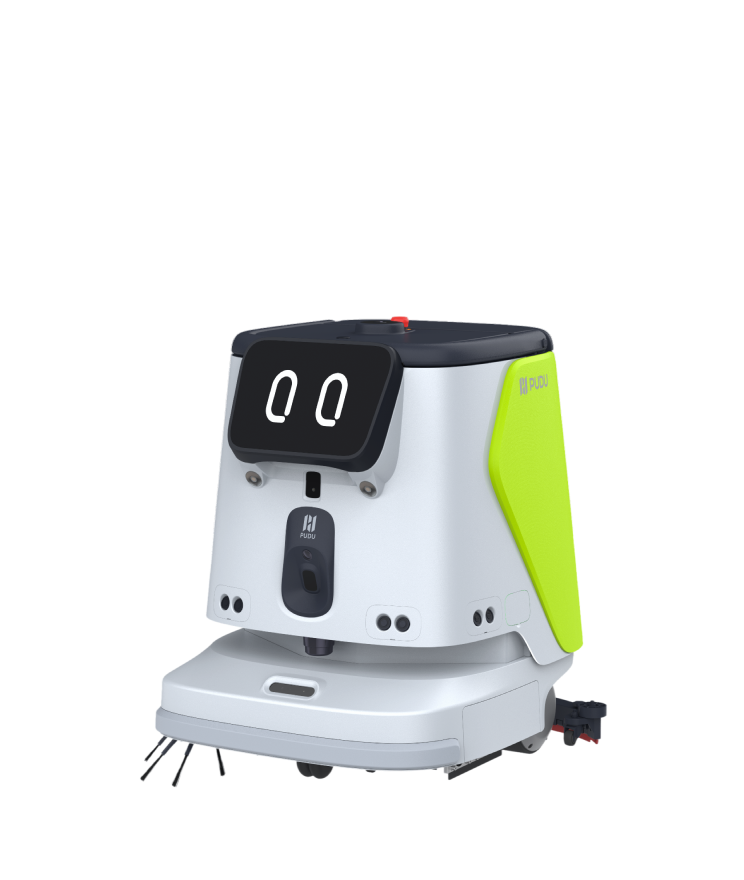
A commercial cleaning robot is a floor-care machine designed for business environments rather than homes. Depending on the model, it can scrub, dry, sweep, vacuum, dust mop or support repeatable cleaning routes with minimal manual operation.
Commercial cleaning robots are used to improve consistency, reduce repetitive manual cleaning tasks and support staff who are responsible for large or high-traffic areas. They are not a replacement for every cleaning task. Corners, detailed edge work, stairs, bathrooms, heavy spill response and irregular mess still require staff. The strongest use case is repeated floor cleaning across suitable areas.
Key principle: A cleaning robot works best when the task is repetitive, the floor area is suitable, the route is predictable and staff are trained to supervise the robot.
Robot types
Types of commercial cleaning robots
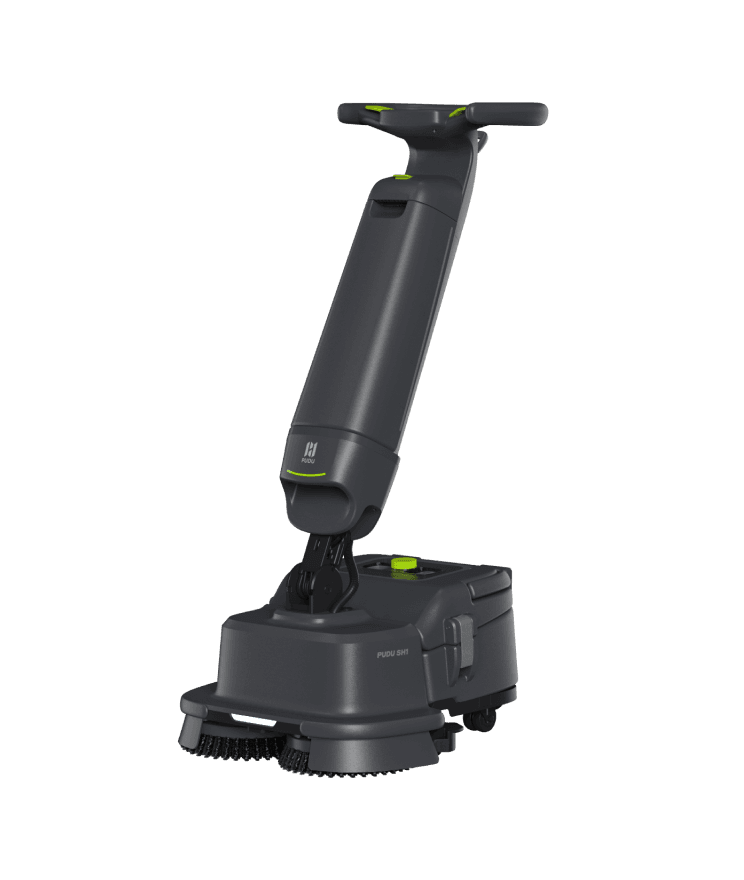
Compact scrubber dryer
A compact scrubber dryer is a small machine used by staff to scrub and dry floors in one pass. Suitable for cafés, commercial kitchens, bakeries, small back-of-house, retail spaces and tight commercial environments.
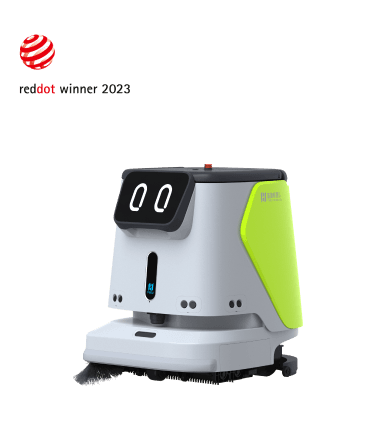
Autonomous scrubber dryer
An autonomous scrubber dryer follows mapped routes and cleans repeatable floor areas with limited supervision. Suitable for hotels, aged care, healthcare, clubs, schools, shopping centres and commercial facilities.
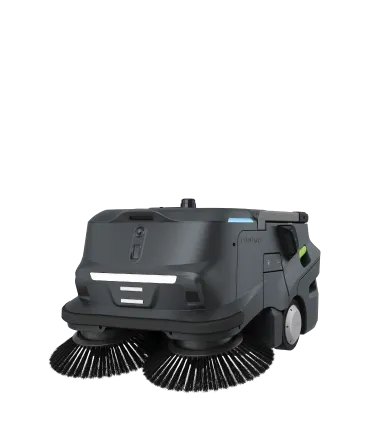
Robotic sweeper
A robotic sweeper collects dry debris, dust and loose materials across larger hard-floor areas. Useful for warehouses, logistics sites, industrial facilities and manufacturing environments.
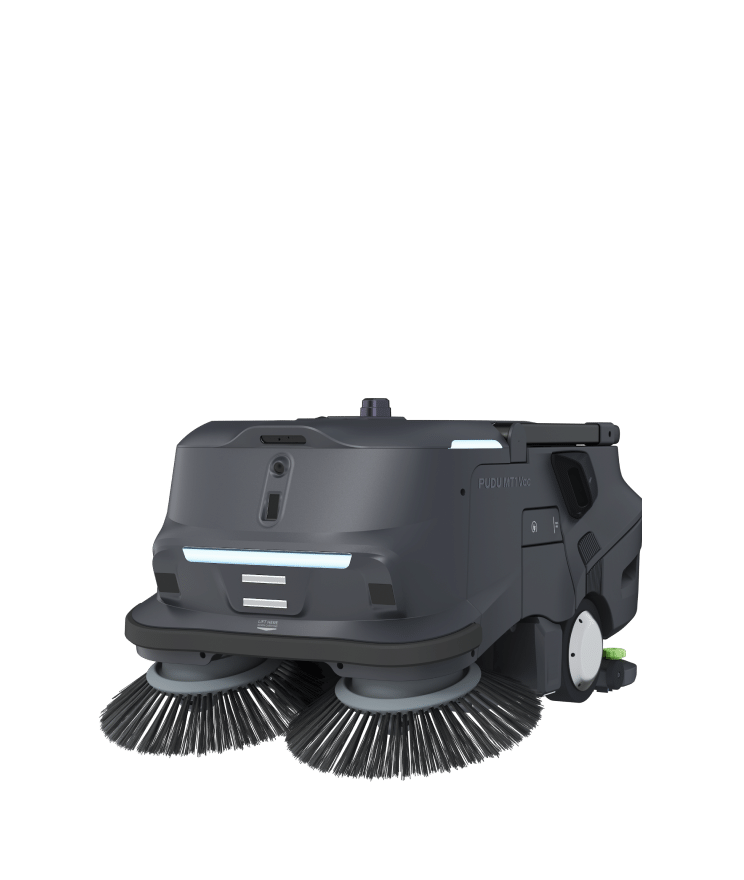
Robotic vacuum
A robotic vacuum is designed for dry vacuuming and dust removal across large indoor areas — carpeted or hard-floor depending on the model and site conditions.
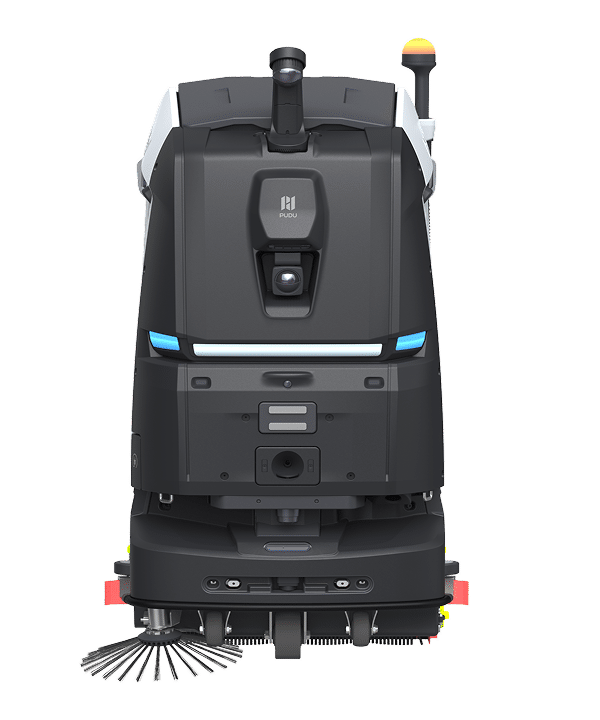
Large autonomous floor scrubber
A large autonomous scrubber dryer is designed for bigger commercial and industrial sites that need high cleaning capacity, larger tanks and stronger floor-care performance.
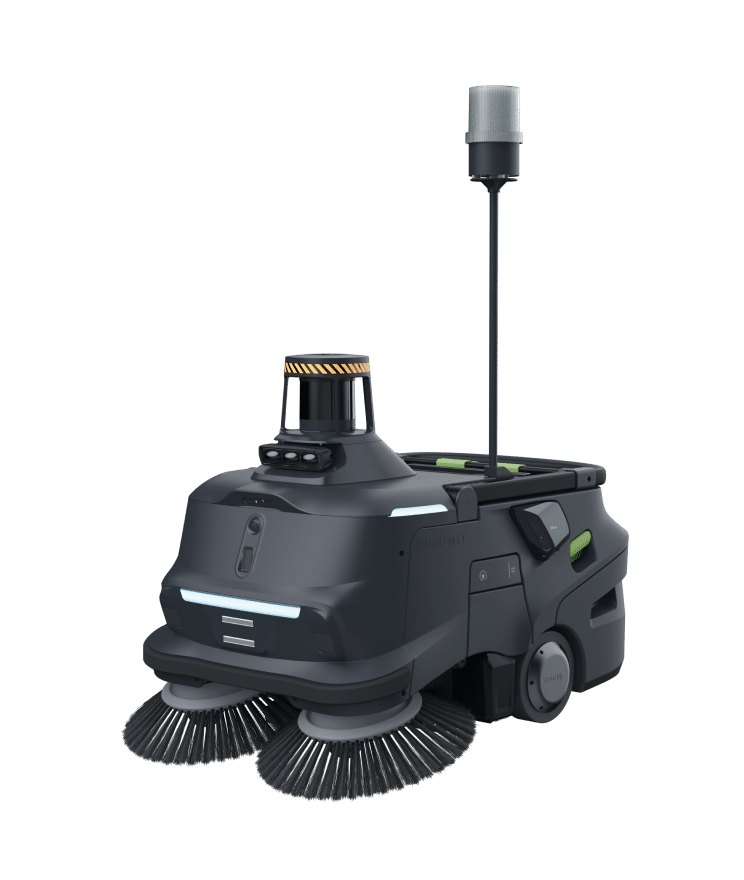
Large-area sweeper for complex environments
A large-area sweeper is suited to bigger or more complex semi-open or industrial environments where wider cleaning coverage and stronger debris handling may be needed.
Floor suitability
Which floors work with commercial cleaning robots?
Floor suitability is one of the most important factors in any robot recommendation. A site assessment should always check the floor type, slope, drainage, transitions, obstacles, lighting, traffic and cleaning goal before selecting a model.
| Floor type | Suitability | Notes |
|---|---|---|
| Vinyl | Usually suitable | Common in healthcare, aged care, schools and commercial facilities. Check slip resistance, transitions and cleaning chemical compatibility. |
| Polished concrete | Usually suitable | Common in warehouses, logistics sites and manufacturing. Check dust type, debris size, forklift traffic and expansion joints. |
| Epoxy floors | Usually suitable | Often suitable for scrubbing or sweeping. Check chemical residue, wet areas and coating condition. |
| Tiles | Usually suitable | Common in hospitality, retail, shopping centres and amenities. Check grout depth, slip resistance and uneven tile edges. |
| Carpet | Model dependent | Requires a vacuum-capable robot such as MT1 Vac. Not suitable for scrubber dryer models. |
| Warehouse floors | Usually suitable | Good fit for sweepers or scrubber dryers depending on dust, debris, traffic and floor condition. |
| Uneven or damaged floors | Site assessment required | Cracks, potholes, slopes, poor drainage or large transitions can reduce robot performance. |
| Wet, greasy or oily floors | Site assessment required | May require specific cleaning process, chemicals, slip controls and staff procedures. |
Cleaning robots are not a WHS control by themselves. They should form part of a broader floor-care and risk management process, including cleaning schedules, staff training, spill response and safe work procedures.
Industries
Which Australian workplaces use commercial cleaning robots?
Warehouses and logistics
- •Dust and debris removal
- •Repetitive aisle cleaning
- •Open floor cleaning
- •Support for cleaning teams outside peak forklift periods
Recommended: MT1, MT1 Vac, MT1 Max, CC1, BG1
Explore robots for this industry →Hotels
- •Lobbies
- •Corridors
- •Function areas
- •Back-of-house floors
- •Overnight or low-traffic cleaning
Recommended: CC1, CC1 Pro, SH1, BG1
Explore robots for this industry →Aged care
- •Common areas
- •Corridors
- •Dining spaces
- •Repetitive daily floor-care tasks
Recommended: CC1, CC1 Pro, SH1
Explore robots for this industry →Healthcare
- •Non-clinical common areas
- •Public corridors
- •Waiting areas
- •Support cleaning consistency
Recommended: CC1, CC1 Pro, SH1
Explore robots for this industry →RSL clubs and hospitality venues
- •Dining areas
- •Function rooms
- •Gaming areas
- •Back-of-house cleaning
- •Early morning or after-hours cleaning
Recommended: CC1, CC1 Pro, SH1, BG1
Explore robots for this industry →Shopping centres and retail
- •Large public floors
- •Food courts
- •High-traffic walkways
- •Repetitive daily cleaning
Recommended: CC1 Pro, BG1, MT1 Vac
Explore robots for this industry →Manufacturing and food production
- •Production-adjacent floors
- •Dry debris collection
- •Repetitive floor maintenance
- •Back-of-house and non-production areas
Recommended: SH1, MT1, MT1 Max, BG1
Explore robots for this industry →Wet, oily, greasy, washdown or food-contact environments need careful site assessment.
Pricing
How much do commercial cleaning robots cost in Australia?
Commercial cleaning robot pricing in Australia depends on robot type, size, automation level, battery system, docking station, setup requirements, warranty, support and finance structure.
| Robot type | Typical use | Indicative cost position | Example models |
|---|---|---|---|
| Compact scrubber dryer | Small commercial spaces, kitchens, cafés, tight back-of-house areas | Lowest entry cost | PUDU SH1 |
| Autonomous scrubber dryer | Medium commercial floors, corridors, common areas | Mid-range commercial robot cost | PUDU CC1, PUDU CC1 Pro |
| Industrial sweeper | Warehouses, logistics, manufacturing, dry debris | Mid to high depending on configuration | PUDU MT1 |
| Robotic vacuum / sweeper-vacuum | Large dry indoor areas, carpet or dust-focused cleaning | Mid to high depending on configuration | PUDU MT1 Vac |
| Large-area sweeper | Larger industrial or semi-open environments | Higher commercial robot cost | PUDU MT1 Max |
| Large scrubber dryer | Large-format commercial and industrial floor scrubbing | Highest cost range | PUDU BG1 Series |
Indicative pricing only. Pricing is and subject to model, configuration, finance approval, site assessment, freight, setup, warranty and support requirements.
For many Australian businesses, the decision is not only purchase price. The more useful question is whether the robot can reduce repetitive labour hours, improve cleaning consistency, extend cleaning coverage or allow staff to focus on higher-value tasks.
Commercial models
Buy vs lease vs rental: which option is best?
Buy
Best for
- • Businesses with approved CAPEX
- • Sites with a clear long-term use case
- • Operators who want ownership
Pros
- • Lowest long-term finance cost
- • Asset ownership
- • Suitable for long-term deployment
Consider
- • Higher upfront spend
- • Need to budget for maintenance, consumables and support
Lease
Best for
- • Businesses that prefer monthly operating cost
- • Sites that want predictable payments
- • Teams that need easier budget approval
Pros
- • Lower upfront cost
- • Easier ROI comparison against labour cost
- • Can include support and warranty structure
Consider
- • Total paid over term may be higher than buying
- • Finance approval may be required
Rental / pilot
Best for
- • Sites that need proof before purchase
- • Complex environments
- • New use cases
- • Internal stakeholder approval
Pros
- • Lower risk
- • Real-world testing
- • Helps validate workflow and ROI
Consider
- • Usually higher short-term cost
- • Needs clear success criteria
If the site is straightforward and the business case is clear, buy or lease may be suitable. If the site is complex, a rental or pilot can help confirm robot fit before committing.
ROI
Cleaning robot ROI: how to calculate payback
A cleaning robot does not need to replace a cleaner to generate ROI. In many workplaces, the business case comes from releasing repetitive labour hours, improving consistency, extending cleaning coverage, reducing overtime pressure or allowing staff to focus on higher-value tasks.
Current manual cleaning cost = labour hours/day × days/week × hourly labour cost × 52 weeks
Robot-supported cleaning cost = robot lease or purchase + setup + maintenance + consumables + remaining supervision time
Example: warehouse cleaning robot ROI
A warehouse that spends 2 hours per day on repetitive floor sweeping, 5 days per week, is using around 520 labour hours per year on that task. If a robot can cover most of that floor area with limited supervision, the business case may be based on labour hours released, cleaner redeployment, more consistent floor coverage and reduced dependency on manual sweeping.
Example: hotel or club cleaning robot ROI
A hotel, RSL club or large hospitality venue may need repeated cleaning across lobbies, corridors, dining areas and function rooms. A robot can support scheduled floor cleaning during low-traffic periods while staff focus on detailed cleaning, guest-facing areas and exception handling.
Safety & WHS
Safety and WHS considerations
In Australia, floor cleaning is not only an operational issue. It is also connected to workplace safety, housekeeping and movement through the workplace.
Safe Work Australia notes that slips, trips and falls cause thousands of preventable injuries each year. It also states that a PCBU must aim to eliminate the risk of slips, trips and falls so far as reasonably practicable, and if that is not possible, minimise risks so far as reasonably practicable.
SafeWork NSW identifies slips, trips and falls as the most common cause of serious injuries at work in NSW after hazardous manual tasks. It also lists common internal risk sources such as uneven flooring, changes in flooring types, poorly maintained floors, slippery surfaces, spills, dust, paper, cluttered spaces, poor lighting, loose mats and loose cords.
A cleaning robot does not remove WHS obligations. It can support a broader floor-care process, but businesses still need appropriate risk assessment, cleaning procedures, spill response, worker consultation, training, signage and maintenance.
Commercial cleaning robots can support WHS goals by helping:
- Maintain more regular floor cleaning schedules
- Reduce repetitive manual scrubbing, sweeping or vacuuming
- Improve consistency in large or high-traffic areas
- Reduce the time staff spend pushing heavy equipment across large floors
- Support cleaning outside peak operating hours
- Document cleaning activity where reporting features are available
Compare
Commercial cleaning robot model comparison
The right model depends on the floor type, debris, area size, cleaning task, traffic, operating hours, staff supervision and budget. The table below provides a practical starting point.
| Model | Type | Best for | Key cleaning task | Typical sites |
|---|---|---|---|---|
| PUDU ET1 | AI-Native compact scrubber-dryer robot | Narrow aisles and business-hours cleaning | Hot-water scrub and dry in one pass, self-cleaning dock | Cafes, restaurants, retail aisles, hotel back-of-house, clinics |
| PUDU SH1 | Compact smart upright scrubber dryer | Smaller commercial spaces and tight areas | Scrub and dry in one pass | Cafés, bakeries, commercial kitchens, small retail, back-of-house areas |
| PUDU CC1 | 4-in-1 autonomous cleaning robot | Repeatable indoor commercial cleaning | Sweep, scrub, vacuum and mop | Hotels, aged care, healthcare, clubs, schools, commercial facilities |
| PUDU CC1 Pro | Pro-grade autonomous cleaning robot | Larger or more demanding commercial environments | AI-supported 4-in-1 cleaning and improved operational reporting | Shopping centres, hospitals, hotels, large aged care, large commercial facilities |
| PUDU MT1 | Autonomous robotic sweeper | Dry debris and industrial floor sweeping | Sweeping dust, dry debris and loose materials | Warehouses, logistics, manufacturing, industrial floors |
| PUDU MT1 Vac | Robotic sweeper and vacuum | Dry vacuuming and dust control | Vacuuming, sweeping and dust mopping | Warehouses, airports, hotels, convention centres, large indoor spaces |
| PUDU MT1 Max | Large-area robotic sweeper | Larger and more complex environments | Large-area sweeping and debris pickup | Large warehouses, industrial facilities, semi-open environments |
| PUDU BG1 Series | Large autonomous scrubber dryer | Large-format floor scrubbing | One-pass sweep and scrub, larger tank capacity, higher coverage | Shopping centres, transport hubs, large warehouses, large manufacturing sites |
Not sure which model fits your site?
Book a Site AssessmentBrowse the full cleaning robot range.
Selection
How to choose the right cleaning robot
Before choosing a commercial cleaning robot, review:
Workplace Robotics can assess these factors before recommending a model. This reduces the risk of buying a robot that looks suitable on paper but does not fit the real site.
Honest take
When a cleaning robot may not be the right fit
A commercial cleaning robot may not be suitable if:
- The site is too small to justify the investment
- The floor is heavily damaged or uneven
- The area changes constantly and cannot be mapped or supervised
- There are too many obstacles, cords, temporary items or narrow spaces
- The task is mainly stairs, bathrooms, detail cleaning or irregular spot cleaning
- The site has heavy grease, oil, washdown or drainage issues without a clear cleaning process
- There is no internal owner responsible for the robot
In these cases, a compact scrubber dryer, manual process improvement, different cleaning equipment or a pilot may be more appropriate than a full autonomous deployment.
Why us
Why choose Workplace Robotics?
Workplace Robotics helps Australian businesses assess, select, deploy and support commercial cleaning robots. The goal is not to sell the most advanced robot. The goal is to recommend the robot that fits the site, task and business case.
FAQ
Frequently asked questions
Last updated: June 2026