
Pillar tool · Last updated June 2026
Robot ROI Calculator Australia: Cleaning and Delivery Robot Payback
Estimate the business case for a cleaning or delivery robot in your Australian workplace. Compare your current manual process against robot-supported operation, including labour hours, robot coverage, purchase cost, lease cost, setup, maintenance, consumables and supervision time.
Built for warehouses, hotels, restaurants, RSL clubs, aged care, healthcare, shopping centres and manufacturing — use it to understand whether a workplace robot may make financial sense before booking a site assessment.
- Cleaning & delivery modes
- Buy vs lease comparison
- 5-year cost estimate
- Payback period
- Labour hours released
- Australian deployment support
This calculator provides indicative estimates only. It is not financial advice and does not guarantee savings, ROI or suitability. Final recommendations depend on a site assessment, robot configuration, pricing, finance approval and operational conditions.
Cleaning Robot ROI and Robotability Calculator Australia
Industry & robot
Large floor areas, dust, debris and daily sweeping or scrubbing.
Pricing
Your site
Time to clean the cleanable area once.
How often the cleanable area is cleaned.
Your labour
Superannuation, leave, workers comp, training.
The robot
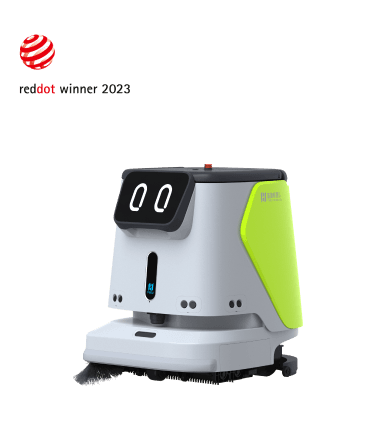
Adjust PUDU CC1's rated 1000 m²/h to reflect real-site conditions.
% of cleanable area the robot can clean autonomously.
Staff time per week to refill, empty, clean, check, move or oversee the robot.
Purchase option
Lease option · 5 years
Show calculation details
Area coverage
Cleaning workload
Labour saving
Labour value
Estimates only. Figures are indicative in AUD excluding GST. This does not constitute a quote, tax advice or financial advice. Actual results depend on site layout, floor type, lift access, doors, shift design and deployment. Subject to site assessment and approval.
Concept
What is robot ROI?
Robot ROI measures the estimated financial return from using a workplace robot compared with the cost of buying, leasing, deploying and supporting it.
For cleaning robots, ROI usually depends on floor area, cleaning frequency, labour hours, robot coverage, supervision time, maintenance and consumables. For delivery robots, ROI usually depends on the number of trips, walking time, operating days, staff cost, robot coverage, loading and unloading time, supervision, setup and support.
Further reading: Investopedia — Return on Investment · Salesforce Australia — What is ROI?
Process
How the robot ROI calculator works
1. Enter your current manual process
2. Choose a robot type
3. Adjust assumptions
4. Compare scenarios
Cleaning robots
Cleaning robot ROI: what affects payback?
Cleaning robot payback depends on how much repetitive floor-care work can realistically be supported by the robot. A robot does not clean every surface, every corner or every irregular mess. Staff are still needed for supervision, edge work, spot cleaning, spill response, detailed cleaning and maintenance.
Floor area
Cleanable percentage
Cleaning frequency
Labour hours per day
Robot productivity
Robot reach percentage
Supervision time
Maintenance & consumables
Buy, lease or rental
Delivery robots
Delivery robot ROI: what affects payback?
Delivery robot payback depends on repeated movement. The stronger the repeatable route and the more frequent the trips, the stronger the potential business case. A delivery robot is not a waiter replacement — it is better understood as a support tool for repeated carrying, running, bussing or internal delivery tasks.
Trips per day
Average minutes per trip
Walking distance
Payload
Robot coverage %
Loading & unloading
Workflow
Lift or door integration
Supervision & adoption
Buy, lease or rental
Finance
Buy vs lease vs rental: how it changes ROI
Buy
Best for: approved CAPEX, long-term use cases, sites with clear and predictable robot fit.
Pros: Ownership, lower long-term finance cost, strong for long-term deployments.
Consider: Higher upfront cost. Maintenance, consumables and support must be budgeted.
Lease
Best for: businesses that prefer monthly cost, sites comparing robot cost with labour hours, easier approval through operating budget.
Pros: Lower upfront cost, easier monthly ROI comparison, predictable cost structure.
Consider: Total cost over term may be higher than purchase. Finance approval may be required.
Rental / pilot
Best for: complex sites, new robot use cases, stakeholder approval, proof before purchase.
Pros: Lower risk, real-world validation, helps test workflow and staff adoption.
Consider: Higher short-term cost. Needs clear success criteria.
If the site is straightforward and the task is repetitive, buy or lease may be suitable. If the environment is complex, a rental or pilot can validate the business case before committing.
Total cost of ownership
What costs should be included in a robot ROI calculation?
A realistic robot ROI calculation should include more than the robot purchase price.
- Purchase price or lease cost
- Setup and training
- Mapping and deployment
- Freight (if applicable)
- Warranty
- Maintenance
- Consumables
- Accessories
- Finance cost (if applicable)
- Staff supervision time
- Residual manual work
- Charging and storage requirements
- Lift or integration cost (if applicable)
- Internal training and adoption time
If maintenance, consumables, setup or supervision time are excluded, the ROI may look better than it will be in real operation.
Credibility
Common robot ROI mistakes
Assuming the robot covers 100% of the task
Correction: Robots usually support the repeatable portion. Staff still handle supervision, exceptions and detail work.
Ignoring supervision time
Correction: Even autonomous robots need staff to start, stop, monitor, refill, empty, clean or respond.
Comparing purchase price only
Correction: A proper model includes setup, maintenance, consumables, warranty and support.
Ignoring staff adoption
Correction: A robot needs an internal owner and trained users. Poor adoption can reduce ROI.
Using the wrong robot model
Correction: A robot that looks impressive may not suit the floor, route, payload, debris or workflow.
Treating robots as staff replacements
Correction: Robots usually create value by supporting staff and reducing repetitive low-value tasks.
Examples
Example robot ROI scenarios
Illustrative examples only — not guaranteed outcomes.
Warehouse cleaning robot ROI
A warehouse uses staff for repetitive sweeping or scrubbing across large hard-floor areas.
Main ROI driver: Labour hours released and more consistent floor coverage.
Typical models: MT1, MT1 Vac, MT1 Max, CC1, BG1
Read the guideHotel cleaning robot ROI
A hotel cleans lobbies, corridors, function areas and back-of-house spaces daily.
Main ROI driver: Scheduled cleaning during low-traffic periods and reduced repeated manual floor-care work.
Typical models: CC1, CC1 Pro, SH1, BG1
Read the guideRestaurant delivery robot ROI
Staff repeatedly walk between kitchen and dining areas during peak service.
Main ROI driver: Reduced low-value walking and support for food runners.
Typical models: BellaBot Pro, PuduBot 2
Read the guideHotel delivery robot ROI
A hotel uses staff for repeated guest amenity, parcel or room-service support trips.
Main ROI driver: More predictable internal delivery and reduced back-and-forth movement.
Typical models: FlashBot Max, PuduBot 2
Read the guideRobot models
Cleaning and delivery robot model links
Cleaning robots
- PUDU SH1 — Compact smart upright scrubber dryer for smaller commercial spaces.
- PUDU ET1 — AI-Native compact scrubber-dryer robot with hot-water washing and a self-cleaning dock.
- PUDU CC1 — 4-in-1 commercial cleaning robot for sweeping, scrubbing, vacuuming and mopping.
- PUDU CC1 Pro — Pro-grade autonomous cleaning robot for larger and more demanding commercial environments.
- PUDU MT1 — Autonomous sweeper for warehouses, manufacturing and industrial floors.
- PUDU MT1 Vac — Sweeper and vacuum option for dry indoor environments.
- PUDU MT1 Max — Large-area robotic sweeper for complex environments.
- PUDU BG1 Series — Large autonomous scrubber dryer for large-format commercial floors.
Delivery robots
- BellaBot Pro — Customer-facing restaurant and service delivery robot.
- PuduBot 2 — Versatile commercial delivery robot for restaurants, hotels, healthcare and commercial spaces.
- HolaBot — Bussing and dish-return robot for hospitality venues.
- KettyBot Pro — Greeting, guiding, advertising and light delivery robot.
- FlashBot Max — Hotel and building delivery robot for internal delivery workflows.
- PUDU T300 — Industrial delivery robot for warehouse and manufacturing workflows.
- PUDU MP2000 — Pallet-handling AMR for full-pallet movement in warehouses and manufacturing.
Local partner
Why use Workplace Robotics for robot ROI assessment?
Workplace Robotics helps Australian businesses assess, select, deploy and support cleaning and delivery robots. The calculator gives an initial estimate, but a site assessment is needed to confirm robot suitability, route design, floor conditions, workflow, pricing and deployment requirements.
FAQs
Frequently asked questions
Next step
Get a practical robot ROI assessment
The calculator gives you a first estimate. A site assessment confirms whether the robot can realistically operate in your workplace, how much of the task it can cover, what setup is required and which model is most suitable.
Ready to see if robots make sense for your workplace?
Book a site assessment and Workplace Robotics will help you identify the right robot, commercial model and deployment pathway.